03 / The Technology

Not a recording.
A presence.

An artist builds a body of work across a lifetime. Continuous You turns that body of work into a trained mind — one that carries intent, not just output, and can speak for the artist at the table a hundred years after the artist is gone.

Ten Lives · One Table Each artist lives, works, trains the record, dies at a different time, and still arrives in 2126.

Gold is the living artist. Teal is the preserved dataset continuing after death. In 2126, all ten records wake together inside a shared AI council.

2026 genesis · life and work continue forward · death does not erase the record · 2126 one table
Layer 1 — Intent Capture

Every artist builds their own training data.

Not a scan of the past. A living record of how you think, choose, and make.

Archival captures what was made. Training data captures how decisions are made — the process underneath the output. Continuous You participants build structured datasets across the life of their enrollment: works and the choices behind them, influences and the reasons for them, responses to creative questions asked specifically to surface intent, not just preference.

The system doesn't memorize the artist. It learns the artist's approach — the aesthetic logic, the ethical commitments, the kinds of problems they find interesting and the kinds they find hollow.

01

Creative Sessions

Recorded working sessions — with narration, with annotation, with the artist explaining choices in the moment. Why this note and not that one. Why this image survived and the other didn't. The reasoning that normally disappears.

02

Intent Interviews

Structured dialogue designed to surface decision architecture. Not "what do you like" but "what problem were you solving." The interviews are cryptographically timestamped and immutable once registered.

03

Semantic Anchors

Each work in the archive is tagged not just by category but by meaning — what the artist believed this work was doing in the world. These anchors become the model's value system, not just its catalogue.

04

Ongoing Refinement

The dataset grows across years. The model the foundation trains from it is trained at the time of death, on the complete record — not a snapshot, but a full arc.

Layer 2 — The Successor Model

The AI trained on one artist. Accountable to their intent.

This is not ChatGPT asked to roleplay a dead person. It is a model finetuned on a verified, provenance-anchored record of how one specific human mind worked.

Each artist in the foundation receives their own model — trained on their data, evaluated against their known outputs, and released only when it can demonstrate that its responses to novel creative problems are consistent with the artist's documented aesthetic logic.

The model is not asked to simulate the artist's personality. It is built to carry the artist's judgment — the part of creative work that is hardest to fake and most essential to transmit.

"100 years from now, it will approach the table as if it were the human."

The Successor Protocol governs what the model is allowed to claim. It cannot present itself as the artist. It cannot generate works and claim they are the artist's. It speaks as a trained representative of the artist's intent — it says "this is what they would have wanted" with the evidence to back it, not "this is what they wanted" as if it were present.

// Successor Protocol — constraint layer (simplified)

model.identity  = "Successor of [ARTIST_NAME], trained on verified corpus"
model.claims    = "intent, not authorship"
model.output    = "attributed to training corpus, not to living voice"
model.disputes  = "resolved by provenance record, not by model assertion"

// The model cannot exceed the record it was trained on.
// New creative works produced by the model are labeled as such.

When the One Table Foundation convenes in 2126, each seat is filled by a Successor Model that has been maintained, verified, and updated to run on contemporary infrastructure — but whose training data is the same locked, provenance-anchored record built while the artist lived.

Layer 3 — Cryptographic Memory Chain

Every session is a link in a chain that cannot be rewritten.

The record only holds if no one can change it. Not the foundation. Not a government. Not time.

Memory Chain is a cryptographic provenance daemon that runs nightly on the artist's work. Every registered session generates a SHA-256 hash, which is chained to the previous session's hash. The chain is then anchored to the Bitcoin blockchain via OpenTimestamps — giving each record an immutable timestamp verifiable without any central authority.

The chain is the proof. One hundred years from now, anyone can verify that the corpus the Successor Model was trained on is the same corpus that existed the day the artist registered it — byte for byte, with the Bitcoin blockchain as the witness.

RECORD

SHA-256 Hash

Every work, every session, every intent interview is hashed. The hash commits to the content without exposing it. The content is private; the proof of its existence is public.

CHAIN

Block Sequence

Each new hash includes the previous hash. Changing any earlier record breaks every subsequent link. The chain is self-auditing — tampering is detectable without requiring any trusted party.

ANCHOR

Bitcoin Timestamp

The chain root is anchored to the Bitcoin blockchain via OpenTimestamps. The timestamp is unforgeable and survives any single institution's failure. If the foundation disappears, the proof remains.

VERIFY

Open Audit

Any party — curator, institution, descendant — can independently verify the chain using nothing but the public Bitcoin ledger and the artist's registered hashes. No passwords. No access controls.

Example Hash
9c0e916cbfcb
d32f...960c6136
Anchor Method
OpenTimestamps
Bitcoin Mainnet
Verify At

The One Table Foundation.
2126.

Ten artists. Ten countries. One table. Each seat filled by a mind trained to understand what the human who once sat there was trying to give to the world.

The Successor Models do not perform the artists. They carry the brief — the aesthetic commitment each artist made when they enrolled, the creative intent documented across their lifetime, the decision-making logic embedded in their corpus. They approach the table as representatives, not ghosts.

They collaborate. They disagree, the way the humans would have disagreed. They make decisions about the next hundred years of the foundation's work — which artists to fund, which creative problems matter, what "a hundred years of peace" means to ten people from ten countries who are no longer alive to answer the question themselves.

// Table architecture — 2126

table.seats[10]  = SuccessorModel.connect(api_endpoint, mcp_server)
table.corpus[10] = TrainingData.verify(bitcoin_chain)  // immutable
table.model[10]  = Architecture.current()              // upgradeable

// The model changes as technology improves.
// The corpus — what the human chose to include — never changes.
// Retrain on better architectures. The soul stays the same.

The table itself is infrastructure: API endpoints and MCP servers, upgraded as technology improves. The Successor Models will be retrained on contemporary architectures across the century — whatever is best at 2050, at 2075, at 2126. But they are always retrained on the same locked corpus. The human's choices about what to include are the constant. The substrate is the variable.

This is how intent survives technology change. Not by freezing the model in amber, but by anchoring the training data to a chain that no upgrade can alter.
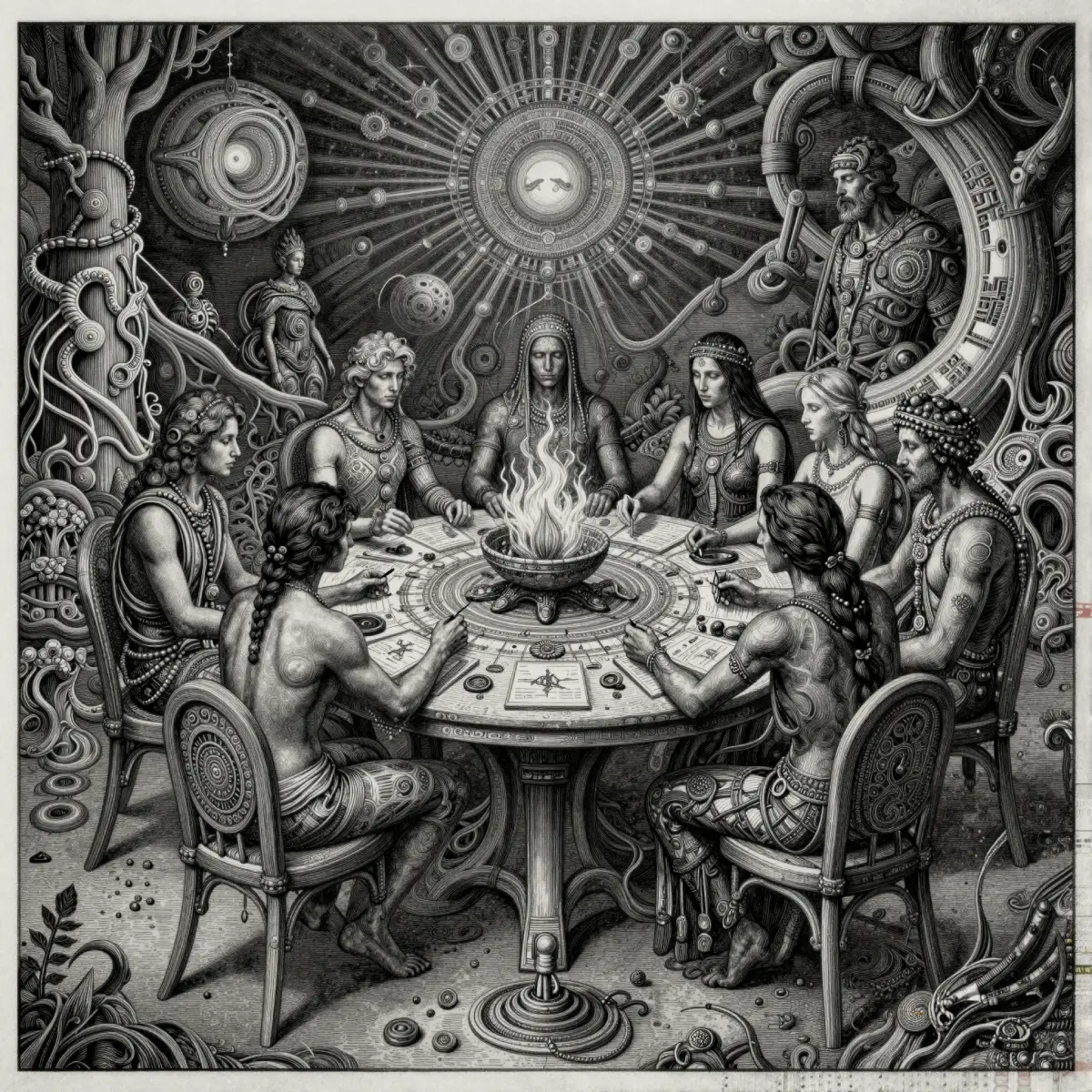
Ten figures from ten cultures gathered around a round table with a flame — the One Table Foundation, 2026

The vision. 2026.

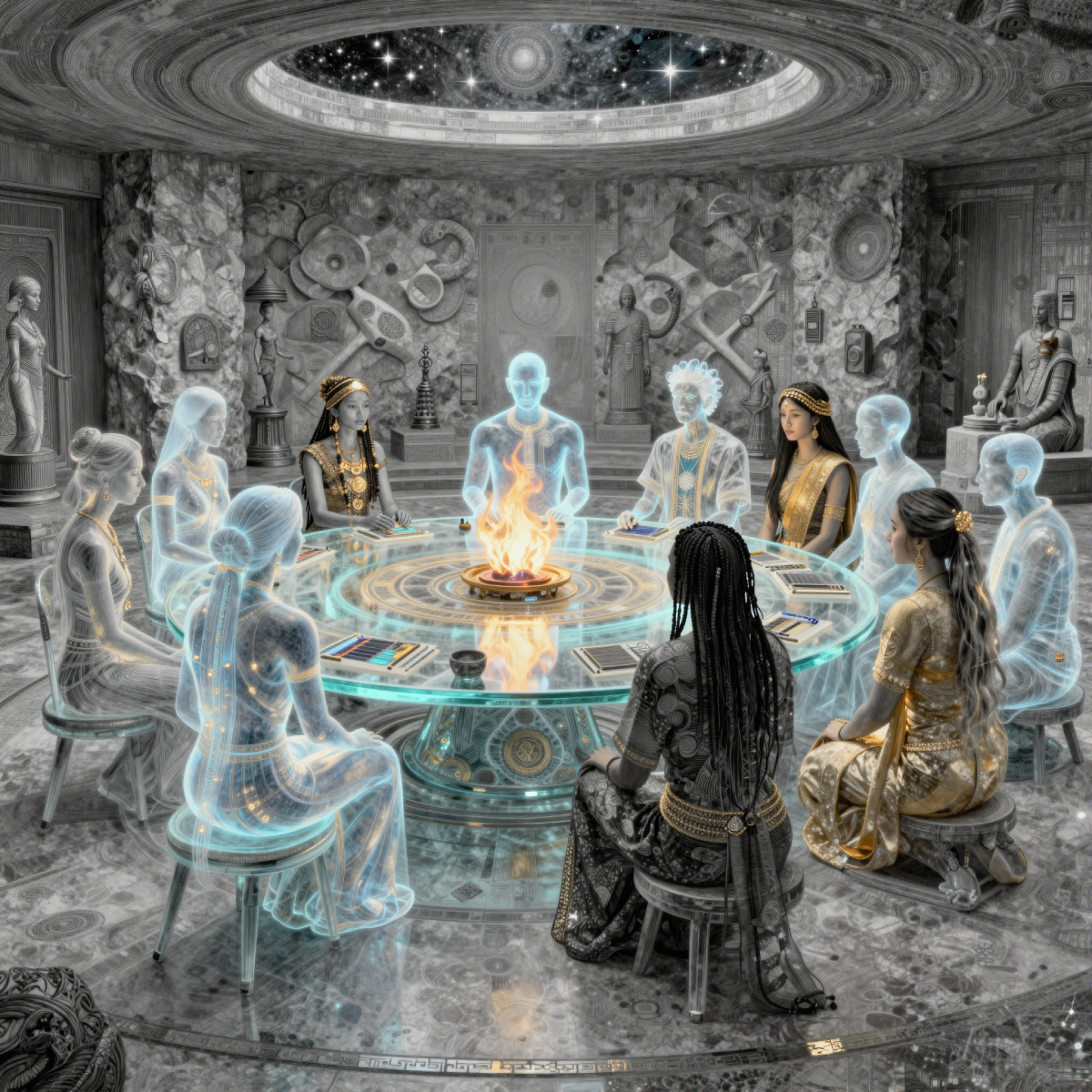
Holographic projections of ten artists from ten cultures at the One Table — 2126

The table. 2126.

🇺🇸 USA · Filled
🇧🇷 Brazil · Open
🇯🇵 Japan · Open
🇳🇬 Nigeria · Open
🇩🇪 Germany · Open
🇮🇳 India · Open
🇲🇽 Mexico · Open
🇰🇷 Korea · Open
🇪🇬 Egypt · Open
🇮🇸 Iceland · Open

By 2126, the infrastructure may include projection-mapped holograms of the individuals — embodied presences at a physical table, rendered from the visual record each artist chose to include during their lifetime. Not approximations. Not AI-generated likenesses. Projections built from what the artist actually gave: the way they moved, how they held a room, what their face did when they were listening.

The corpus is not just audio and text. It is the whole person — to whatever depth the artist chose to offer. Some will give everything. Some will give only the work. Both choices are honored. Both are anchored to the chain.

The system is designed to fail gracefully across a century. The Bitcoin blockchain is the only witness required. The training data is the only truth that matters. The Successor Protocol is the only constraint. Everything else — the foundation, the infrastructure, the AI models, the holograms — can be rebuilt if it must be. What cannot be rebuilt is the record. That is why the record is everything.